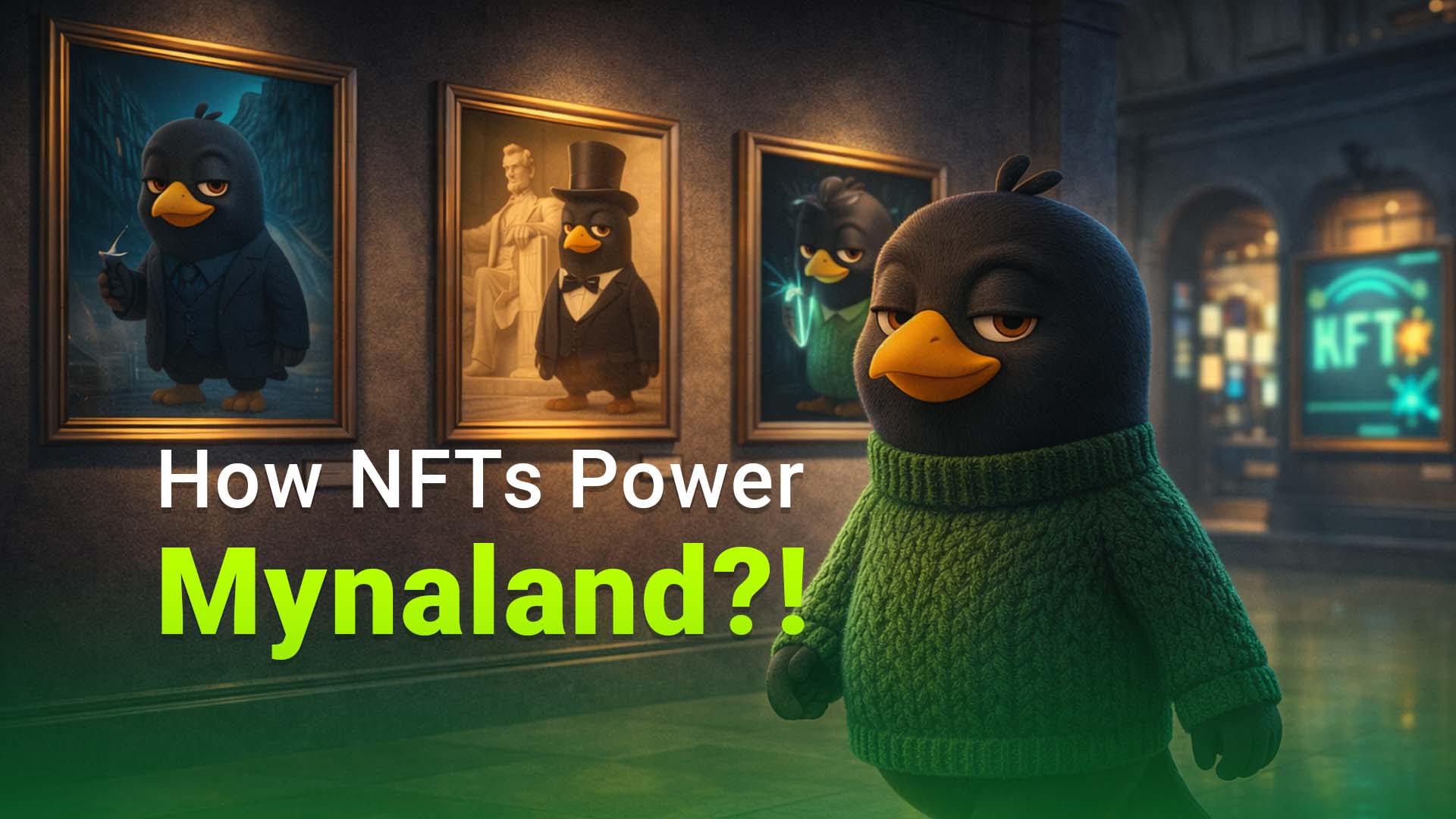
NFTs as Systems, Not Collectibles
Most games that use NFTs treat them as static items: you buy them, you hold them, maybe you resell them.
Mynaland was designed around a very different idea.
In Mynaland, NFTs are living systems.
They control access, time, energy, reward probability, and long-term economic power. They are deeply tied to how players learn, compete, and earn.
Instead of separating “gameplay” from “economy” Mynaland fuses them.
Every NFT reflects player effort, strategic choices, and risk management, not just spending power.
This article explains how Mynaland NFTs actually work:
• how players obtain them,
• how minting and merging function,
• how cooldowns, batteries, keys, and chests shape the economy,
• and why these mechanics exist in the first place.
Mynaland: Two Worlds, One Economy
Mynaland is built on two tightly connected layers.
1. Language Learning Layer
Players begin by learning new languages through interactive and gamified activities.
By completing lessons and missions, they earn:
• XP
• in-game currency
• shards
• stars
• utility items
These resources do not stay isolated inside education. They are the foundation of the NFT economy.
2. Crypto & Multiplayer Layer
NFTs created or purchased by players act as:
• entry tickets to multiplayer games,
• access keys to reward-based competitions,
• tools for earning real economic value.
This design ensures that learning is never disconnected from value creation.
What Is an NFT in Mynaland?
An NFT in Mynaland is a functional asset, not a collectible.
Each NFT simultaneously represents:
🎟 Access to multiplayer modes
⚡ Energy required for gameplay
📊 A modifier for token distribution
🧠 A strategic economic choice
NFTs come in five rarity tiers:
Common, Uncommon, Rare, Epic, Legendary.
Higher rarity NFTs:
• generate more tokens and utility items,
• have longer cooldowns,
• and unlock higher earning potential.
How Players Obtain NFTs
Players can obtain NFTs through two paths.
1. Minting NFTs
After reaching a required level (e.g., Level 10), players can mint NFTs using:
• tokens,
• shards (e.g., 300),
• gems (with real-world value).
Lower-tier NFTs (Common & Uncommon) may generate tokens probabilistically rather than guaranteed, reinforcing progression and strategy.
2. Buying from the Marketplace
Players can also purchase NFTs directly and immediately access multiplayer content even without completing the learning phase.
NFT Genetics: Why No Two NFTs Are Identical
Every NFT in Mynaland has a genetic structure.
Each NFT contains:
• 6 core stats: cooldown, tokens, shards, XP, keys, batteries
• dominant and recessive genetic traits (A+ to C)
These traits determine the exact numerical behavior of each stat, meaning two NFTs of the same rarity can still perform very differently.
Merging NFTs: Breeding, Burning, and Progression
Merging (Breeding) is central to Mynaland’s sustainability.
How Merging Works
• 3 NFTs of the same rarity are combined,
• all three NFTs are burned,
• One higher rarity NFT is created.
The new NFT inherits genetic traits from its parents through dominant/recessive recombination.
Why Burning Matters
• controls NFT inflation,
• protects long-term value,
• makes high-tier NFTs scarce by design.
Mutation: High Risk, High Reward
During minting or merging, there is a small chance of mutation.
Possible mutations include:
• NFTs with no cooldown,
• guaranteed token output,
• immunity to burning,
• boosted earnings beyond normal caps,
• “cursed” NFTs with high output but limited lifespan.
Mutations create rare jackpot moments and long-term player goals.
Active NFTs, Slots, and Strategic Choice
Players may own many NFTs, but:
• only active NFTs affect rewards,
• players start with 1 active slot,
• Every 10 levels unlock another slot (up to 4).
Choosing which NFT to activate directly affects earnings and progression.
Cooldowns, Batteries, and Time Management
After each use, NFTs enter a cooldown period.
Higher rarity NFTs → longer cooldowns
Prevents unlimited farming
Batteries
Batteries reduce cooldown time and can be obtained via:
• In-game shop,
• Limited-time events.
They introduce resource management and microeconomic decisions.
Chests and Keys: Controlled Reward Flow
• Each NFT use grants a chest matching its rarity.
• Chests open after a predefined period of time based on their rarity.
Keys instantly unlock chests.
Keys can be:
• purchased,
• earned through events.
Without keys, players may spend tokens to accelerate timers, encouraging small, frequent transactions.
NFTs and Token Distribution
Total token supply: 3 billion
1.5 billion distributed over five years
Distributed only among daily active users who own NFTs
NFT ownership does not affect learning progress, but it directly determines token earnings.
Player Archetypes and NFT Roles
Mynaland supports multiple player profiles:
• Free players (learning only)
• Low spenders (basic multiplayer access)
• Mid spenders (events and higher risk games)
• High-tier players (maximum rewards, passive income, governance roles)
• NFTs scale naturally across these tiers.
Trading, Withdrawal, and Market Controls
NFTs can be:
• transferred,
• sold,
• auctioned.
Withdrawal mechanics include:
• withdrawal tax,
• level-based monthly caps,
• optional unlimited withdrawal licenses.
These controls protect economic stability.